Brazilian Portuguese vs. European Portuguese
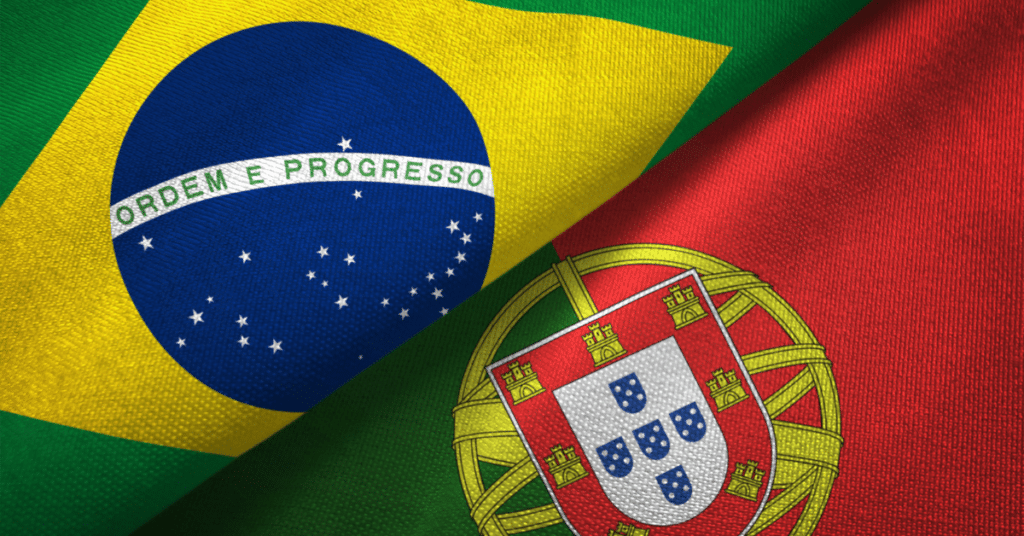
Portuguese is spoken by over 250 million people worldwide. But did you know that depending on where you are, the language can sound, and even lookquite different? Brazilian Portuguese and European Portuguese are the two dominant forms of the language, each brimming with unique flavors influenced by centuries of culture, geography, and evolution.
In this article, we’ll explore the fascinating distinctions between Brazilian Portuguese and European Portuguese. From pronunciation quirks to cultural expressions, and from grammar rules to real-life applications, get ready for a deep dive into the Lusophone world.
The Origins and History of Portuguese
Portuguese sprouted from Vulgar Latin, the colloquial form spoken during the Roman Empire. As the empire fell and tribes migrated, this early Latin fused with local dialects, forming the foundation of what we now recognize as the Portuguese language.
The Age of Discoveries in the 15th century was a turning point. Portuguese explorers spread their language across Brazil, Africa, and parts of Asia. In Brazil, the Portuguese language blended with indigenous languages and later African dialects, shaping a new variant: Brazilian Portuguese. Meanwhile, in Europe, Portuguese retained its Latin-rooted form but continued evolving through contact with other European languages.
Colonial Influences and Divergence
Brazilian Portuguese owes much of its uniqueness to indigenous languages like Tupi and Guarani, as well as African languages brought by enslaved peoples. This influence can be seen in vocabulary for food, flora, and fauna, words like abacaxi (pineapple) or mandioca (cassava).
In contrast, European Portuguese stayed closer to Latin and was more influenced by neighboring Romance languages like Spanish, French, and Galician.
Global Presence of the Portuguese Language
Portuguese is an official language in nine countries and regions, including Brazil, Portugal, Mozambique, Angola, and Cape Verde. Brazil alone accounts for nearly 80% of all Portuguese speakers, which is why Brazilian Portuguese is often the version taught to international learners.
Pronunciation and Phonetic Differences
Brazilian Portuguese is often described as more musical and open. Vowels are pronounced clearly, and there’s a sing-song quality, especially in Rio de Janeiro or the Northeast.
European Portuguese tends to “swallow” syllables. Many vowels go unpronounced, making it harder for beginners to catch words in real-time. It’s more nasal and compressed.
| Word | Brazilian Pronunciation | European Pronunciation |
|---|---|---|
| Obrigado (thank you) | oh-bree-GAH-doo | obrr-GAH-doh |
| Difícil (difficult) | jee-FEE-see-o | deh-FEEC-il |
| Tudo bem? (All good?) | TOO-doo BENG? | TU-doo BAIN? |
Grammar: The Heart of the Divide
One of the starkest grammar differences is in the second-person plural. Brazilian Portuguese uses “vocês” (you all), while European Portuguese prefers “vós” or “vocês” in formal writing and “tu” in speech.
- Brazil: Vocês falam rápido (You all speak fast)
- Portugal: Vós falais depressa
Another noticeable difference is the use of gerunds:
- Brazil: Estou comendo (I’m eating)
- Portugal: Estou a comer
Vocabulary: Same Language, Different Words
Even common words differ significantly. Here’s a quick comparison:
| English | Brazilian Portuguese | European Portuguese |
|---|---|---|
| Bus | Ônibus | Autocarro |
| Cellphone | Celular | Telemóvel |
| Ice Cream | Sorvete | Gelado |
| Suit | Terno | Fato |
Brazil tends to borrow more from English due to its cultural exposure, while Portugal leans towards more traditional and sometimes French-influenced words.
Spelling and Orthographic Reforms
The 1990 Portuguese Language Orthographic Agreement aimed to unify spelling across Lusophone countries. Still, some differences remain:
- Brazil: ação
- Portugal: acção (before the reform)
Brazil often simplifies spellings and omits silent letters, making it more phonetic.
Formality and Usage in Conversation
In Portugal, the usage of “tu” (you informal) vs. “você” (you formal) is much stricter and indicative of social hierarchy. In Brazil, “você” is widely used across social contexts, making interactions more casual.
Regional Accents and Dialects
Brazil:
- South: European-influenced, German and Italian tones
- Northeast: Rhythmic and musical, influenced by African languages
- Southeast (São Paulo/Rio): Fast-paced, urban slang-heavy
Portugal:
- North: Harder consonants, Galician influence
- South: Softer, more drawn-out vowels
- Islands (Azores/Madeira): Distinct melodic variations
Idioms and Everyday Phrases
Idioms vary wildly between the two versions:
| English | Brazilian Portuguese | European Portuguese |
|---|---|---|
| To give up | Chutar o balde | Atirar a toalha ao chão |
| To lend a hand | Dar uma mãozinha | Dar uma ajuda |
Understanding these phrases helps grasp the cultural mindset behind each expression.
Media and Pop Culture Differences
In Brazil, telenovelas are a cultural staple. You’ll also hear plenty of pop and funk in music. In Portugal, you’ll hear more fado and European cinema.
Brazilian content tends to be more globally accessible due to population and market size, but European content retains its formal literary structure.
Digital Learning Tools for Each Variant
- Brazilian Portuguese: Duolingo, Babbel, PortuguesePod101
- European Portuguese: Memrise, PracticePortuguese.com, Linguno
Always check which variant the app teaches!
Business, Travel, and Professional Uses
- Brazilian Portuguese is vital for South American markets, trade, oil & gas, and tourism.
- European Portuguese is key for diplomacy within the EU, tourism in Portugal, and legacy legal documents.
Gender Neutrality and Language Evolution
Brazil is leading the gender-neutral movement, using terms like todes instead of todos. Portugal is slower to adapt, due to formal linguistic norms.
What Lies Ahead for the Portuguese Language
Portuguese will continue to evolve, shaped by globalization and tech. Brazilian Portuguese is growing fast in music, tech, and internet culture, while European Portuguese holds its own in classical literature and diplomatic contexts.
FAQs
What is the key difference in pronunciation between Brazilian and European Portuguese?
Brazilian Portuguese is more open and vowel-rich, while European Portuguese is more compressed and nasal.
Is Brazilian Portuguese easier to learn than European Portuguese?
Most learners find Brazilian Portuguese easier due to its clearer pronunciation and wider digital resources.
Are Brazilian and European Portuguese mutually intelligible?
Yes, but with some difficulty, especially when spoken quickly or regionally.
Do they use different grammar rules?
Yes, especially in verb conjugation, pronoun usage, and the use of gerunds.
Can I use Brazilian Portuguese in Portugal or vice versa?
You can, but locals may find it odd. It’s best to learn the variant relevant to your goals.
Is the spelling the same in both versions?
Largely, due to orthographic reforms, but Brazil still prefers simplified forms.
Conclusion
Whether you’re learning Portuguese for travel, business, or personal passion, understanding the differences between Brazilian Portuguese and European Portuguese will greatly enrich your experience. Despite their differences, both variants offer beautiful, rich expressions of culture, history, and identity. Knowing which one fits your needs ensures effective communication and cultural appreciation.