
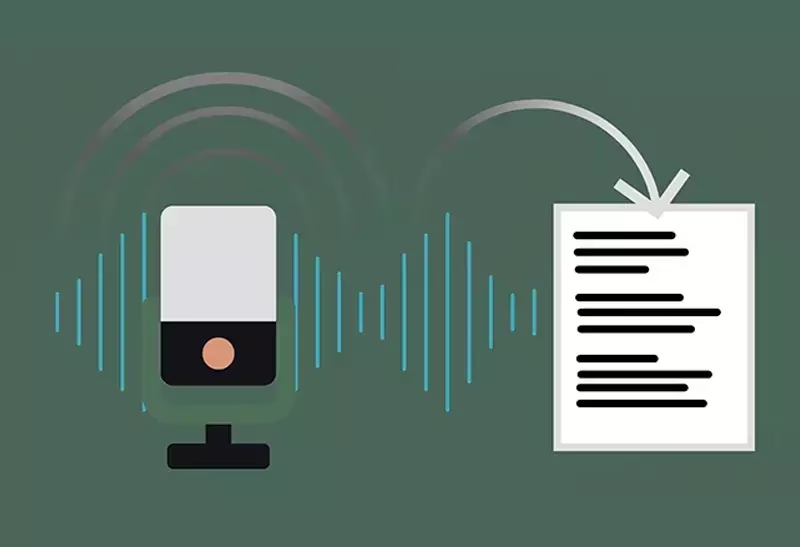
Transcription for Accessibility, SEO and Productivity
In today’s rapidly evolving digital world, audio and video transcription has become indispensable for businesses, educators, content creators, and professionals across industries. The practice of converting spoken words into written text may seem straightforward at first glance, yet its implications ripple across accessibility, search engine optimization (SEO), content repurposing, and knowledge management.
Whether you’re a podcaster, lecturer, journalist, or corporate leader, integrating transcription into your workflow opens doors to broader audiences and greater efficiency. This guide will explore the transformative potential of audio and video transcription, its tools, applications, and best practices to help you stay ahead in the information age.
The Evolution of Audio and Video Transcription
Long gone are the days when transcription meant hours of manually typing from dictation or tapes. With the advent of artificial intelligence, machine learning, and natural language processing, transcription technology has evolved from human-only services to hybrid and fully automated systems.
Today’s transcription landscape includes speech recognition software that processes spoken content in real time, cloud-based platforms offering collaborative editing, and APIs that integrate transcription directly into multimedia platforms. This evolution empowers users with faster turnaround times, multilingual support, and scalable solutions.
Why Audio and Video Transcription Matters
At first, transcription might seem like an administrative task. However, it’s a powerful catalyst for inclusivity, content accessibility, and discoverability. For businesses and educators, it’s not merely about compliance. It’s about enhancing user experience and engagement.
By transcribing audio and video content, you create written records that are easily searchable, archivable, and adaptable across different formats. This accessibility ensures that no audience is left behind, whether due to hearing impairment, language barriers, or preference for text-based consumption.
Key Benefits of Audio and Video Transcription
Let’s dive deeper into the specific advantages that audio and video transcription offers:
- Increased accessibility: Makes content usable by individuals who are deaf or hard of hearing.
- Enhanced searchability: Enables keyword searches within long-form audio or video archives.
- Content repurposing: Provides a textual base for creating blog posts, articles, social media content, and reports.
- SEO optimization: Transcripts improve website SEO by adding indexable keywords for search engines.
- Better data analysis: Researchers and analysts can extract patterns and insights from large volumes of spoken content.
In essence, transcription transforms passive listening into actionable, searchable, and reusable data.
Accessibility Through Audio and Video Transcription
Accessibility is more than a buzzword; it’s a moral, social, and sometimes legal imperative. Transcripts serve as essential accommodations for individuals with hearing loss, allowing them to access educational, corporate, and entertainment content that would otherwise be unavailable.
Moreover, transcription supports users in noisy environments or situations where listening to audio isn’t feasible. Educational institutions, government agencies, and public service providers leverage transcription to comply with accessibility laws like the Americans with Disabilities Act (ADA) and the Web Content Accessibility Guidelines (WCAG).
Improving Searchability with Transcriptions
Ever tried finding that perfect quote from a two-hour podcast? Without a transcript, it’s like searching for a needle in a haystack. Transcripts unlock granular search functionality, letting users jump straight to relevant moments within audio or video files.
For organizations managing large multimedia libraries, transcription enables metadata tagging, indexing, and integration with content management systems (CMS). This makes knowledge retrieval faster and more reliable.
Boosting Content Creation via Transcriptions
Transcripts are a goldmine for content creators. From a single video interview, you can generate:
- Pull quotes for social media
- Long-form blog articles
- Email newsletters
- E-books or whitepapers
- Infographics highlighting key insights
By repurposing audio and video content through transcription, creators can multiply their content output without sacrificing quality. It’s a strategy that saves time, maximizes ROI, and keeps your editorial calendar thriving.
Supporting Data Analysis with Transcription Tools
In qualitative research, transcription is indispensable. Analysts can code transcripts for themes, sentiments, and patterns far more effectively than working directly with audio.
Transcription also enables natural language processing tools to parse large datasets, generating actionable insights from interviews, focus groups, or call center recordings. In legal, academic, and healthcare settings, transcripts become part of vital records, documentation, and compliance audits.
How Audio and Video Transcription Drives SEO
Search engines can’t “listen” to audio or video content, but they can read transcripts. Embedding transcripts alongside multimedia content adds crawlable, indexable text that boosts your site’s keyword density without keyword stuffing.
This improves your rankings for both branded and long-tail search queries, driving organic traffic to your content. Transcripts also increase dwell time and reduce bounce rates by enabling users to scan content before committing to watching or listening.